THE EDIT: After Midnight
- tuanuzza
- May 17
- 2 min read


There’s a certain version of fashion that only exists after midnight.
Not the polished version seen earlier in the evening, not the carefully planned outfit photographed before leaving the house, but the version that appears later, once the night softens around the edges.
After midnight, fashion becomes less performative and more instinctive.
A blazer slips slightly off the shoulder. Jewelry gets tossed onto restaurant tables between conversations. Lipstick fades. Heels become slower against hotel floors. Mirrors catch fragments of people instead of complete images.
And somehow, that version always feels more interesting.

There’s something cinematic about the hours after an event ends.
The city becomes quieter, but emotions become louder. Conversations stretch longer than they should. People stop trying so hard to impress each other. The atmosphere changes from presentation to presence.
That’s where style becomes personal again.
Not in perfection, but in what remains after perfection dissolves.
Fashion often spends too much time trying to appear untouched. Controlled. Crisp. Complete. But the moments people actually remember rarely look that way.
They look blurred.
Slightly overheated.
Undone in a beautiful way.
A silk dress wrinkled from sitting too long at dinner. Smudged eyeliner under dim bathroom lighting. Silver jewelry reflecting flash photography in the backseat of a car. Perfume lingering on jackets the next morning.
Those details tell the real story.
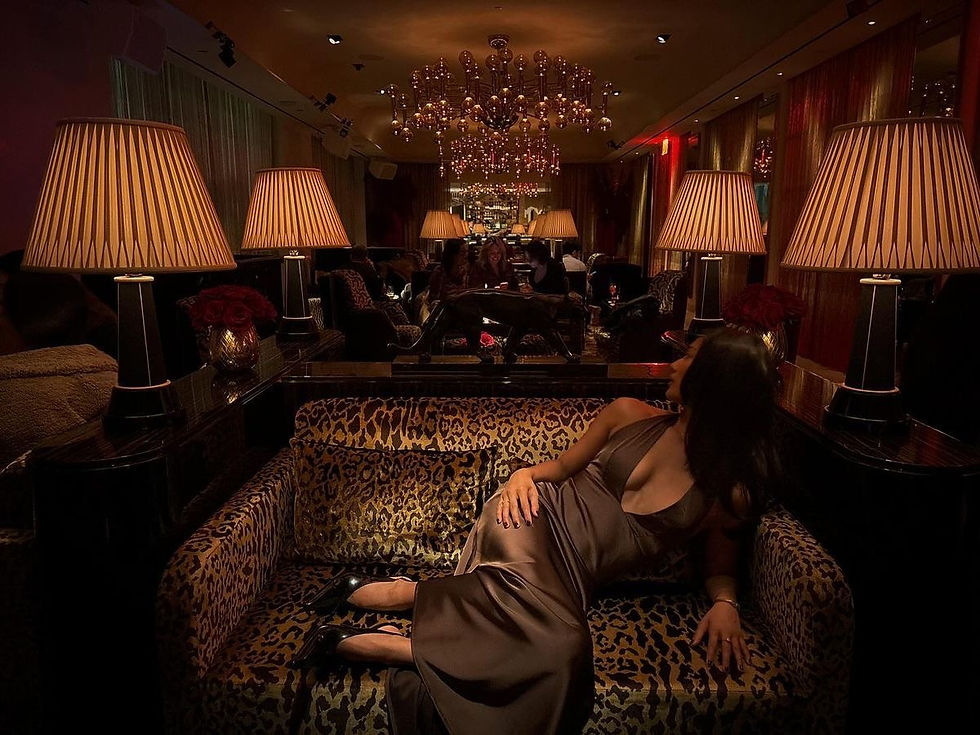
There’s also a loneliness to after-midnight fashion that makes it compelling.
Not sadness, exactly, but distance.
The feeling of standing in an elevator alone after hours surrounded by noise. The silence after music cuts out. The strange calm that arrives once everyone leaves and the city finally exhales.
Fashion has always been tied to emotion, but lately it feels increasingly optimized for visibility instead of feeling. Clothes are expected to perform instantly now, reduced to aesthetics designed for speed and approval.
But some of the best style moments are quieter than that.
They aren’t built for algorithms.They’re built for memory.
And memory is slower.

Maybe that’s why after-midnight aesthetics continue to resonate so deeply. They remind people of something fashion has been losing, intimacy.
Not intimacy in the romantic sense, but intimacy in atmosphere. Clothing connected to moments instead of trends. Personal style connected to experience instead of performance.
The most beautiful looks are rarely the loudest ones in the room.
Usually, they’re the ones noticed later.
The jacket left on a chair.
The rings abandoned beside a cocktail glass.
The reflection in a mirrored elevator at 2am.
Small things.
Human things.
The kind fashion often forgets to leave room for.

NUZZA Take
The future of fashion isn’t hyper-perfection.
It’s atmosphere.
People don’t just want clothes anymore. They want feeling, memory, texture, energy. They want to see themselves inside the image, not just admire it from a distance.
And sometimes the most interesting version of style appears only after the night is already over.


Comments